
EMDR Therapy & Intensives
in Staveley, Kendal and online
EMDR (Eye Movement Desensitisation and Reprocessing) is an evidence-based therapy for post-traumatic stress disorder (PTSD). It can also be helpful for a range of other difficulties, including anxiety, phobias, distressing memories, low self-esteem and difficulties associated with painful or overwhelming life experiences.
I offer EMDR therapy for adults, children and young people, both in regular therapy sessions and as EMDR intensives. Sessions are available in person in Staveley, near Kendal in Cumbria, and online.
I am a UKCP-registered Child and Adolescent Psychotherapist and Adult Psychotherapeutic Counsellor, with specific EMDR training for both adults and children.
If you are unsure which approach would suit you best, we can explore this together during an initial consultation.
What is EMDR?
After something overwhelming, the mind and body can hold the memory in a way that sometimes doesn't settle on its own. You might notice this as intrusive images, nightmares, panic, a strong startle response, a sense of threat when you logically know you are safe, or your body continuing to brace as if something is about to happen.
Some people experience these responses following a single traumatic event, while others have experienced repeated or prolonged trauma. For some, these difficulties may be associated with post-traumatic stress disorder (PTSD), although you do not need to have a PTSD diagnosis to explore whether EMDR might be helpful.
EMDR cannot change what happened in the past, and it doesn't erase memories. It can, however, help your mind and body recognise that an experience is in the past, rather than continuing to respond to the memory with the same intensity in the present.
How does EMDR work?
During EMDR, we work with memories, thoughts, emotions and body sensations associated with distressing experiences.
We use something called bilateral stimulation (BLS). This might involve following my fingers with your eyes, alternating taps or sounds that move from left to right, depending on what works best for you.
We work in short sets, pausing regularly to notice what you are experiencing. You might notice memories, images, body sensations, emotions or changes in how you understand what happened.
You don't need to work everything out or deliberately analyse your experience. We make space for what you notice, and I help guide the process.
You remain in control throughout. You don't need to describe every detail of your experiences, and you can ask to pause or stop at any point.
What can EMDR help with?
I offer EMDR with a range of experiences and difficulties, including:
Single-event trauma or difficult experiences that are contained to one period of time
Post-traumatic stress disorder (PTSD) and complex PTSD (CPTSD)
Childhood and relational trauma, including repeated experiences over time
Anxiety, fears and phobias
Triggers, distressing memories, intrusive images, nightmares and body responses that feel disproportionate to what is happening now
We would clarify together what you are noticing, what you would like to change, and what would help you to know the work is supporting you.
What happens in EMDR therapy?
Although everyone's process is individual, EMDR usually includes three parts.
1. Preparation and developing resources
We begin with an initial assessment, so I can learn more about what you are experiencing, what you have already tried and what has helped.
I often describe therapy as a bit like preparing for a journey. Before we set off, it helps to know where we are heading, to consider the route, and to make sure you have what you need for the terrain.
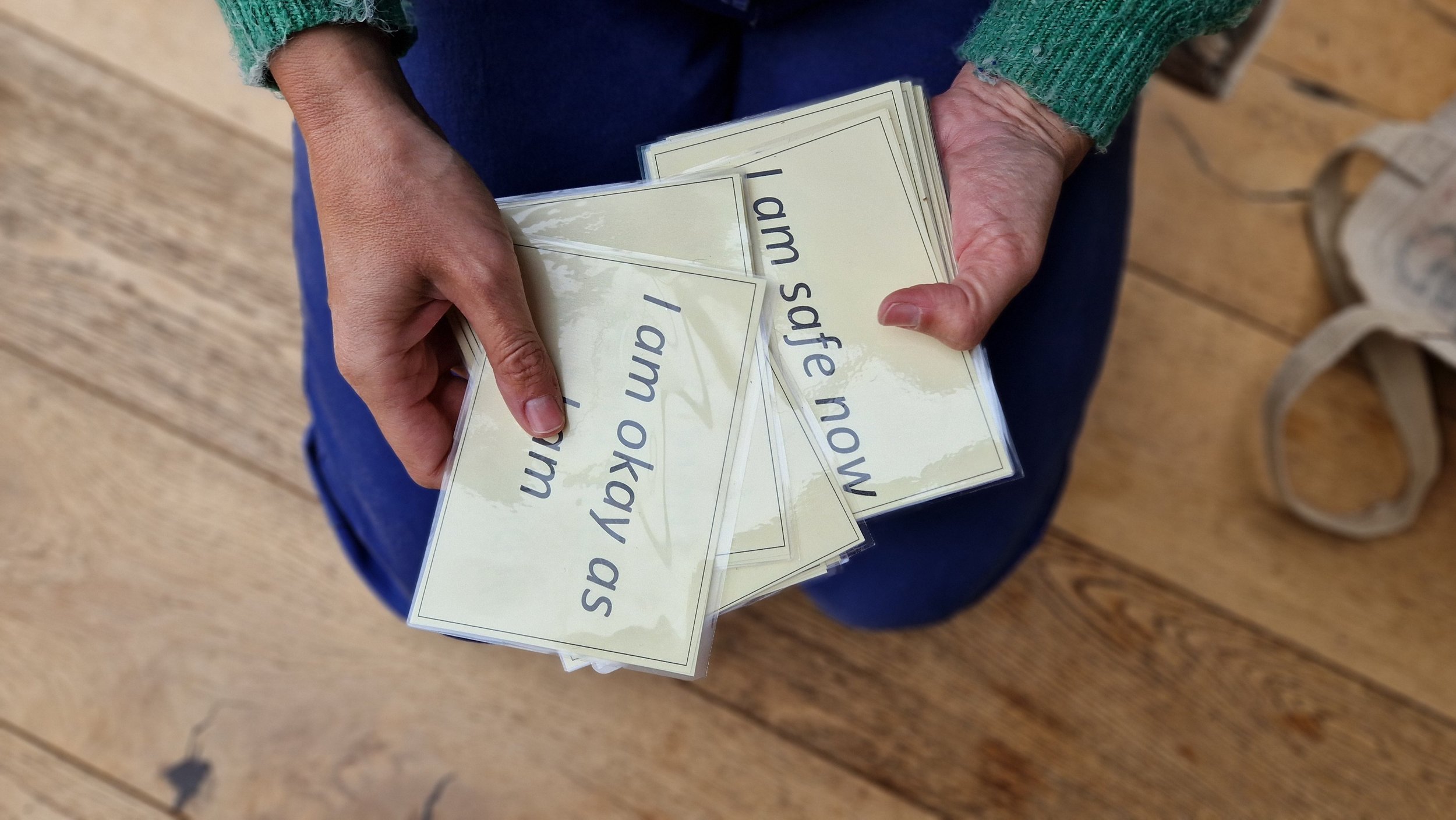
Before working directly with distressing memories, we spend time developing resources to help you stay connected to the present moment and manage overwhelming feelings.
This might include exploring ways of anchoring attention in sensory experiences, such as sounds, sights, touch and smell, and/or working with breath, movement, creativity and image-work to help you feel more stable and supported.
For some people this takes a few sessions. For others, particularly when there have been repeated or prolonged traumatic experiences, we may spend longer on preparation.
2. Working with memories
When we have developed the resources needed, we can begin working more directly with distressing memories using EMDR.
We work in short sets of bilateral stimulation, with regular pauses to notice what you are experiencing and what you might need.
You might notice changes in the feelings, thoughts, images or body sensations associated with the memory.
We work at a pace that fits you, with opportunities to pause, take breaks or return to the resources we have developed.
3. Consolidating the work
An important part of EMDR is allowing time for the work to settle and for you to notice what may have changed.
We make sure each session ends with time to reconnect with the present and consider what might support you afterwards.
Many people notice changes in how they relate to a memory or difficulty, perhaps experiencing more distance, less distress, more choice, or a greater sense of knowing that what happened in the past is not happening now.
We regularly review how the therapy is going and whether further sessions would be useful.
EMDR with Children and Adolescents
I am specifically trained in EMDR with children and adolescents, as well as adults. I am also a UKCP-registered Child and Adolescent Psychotherapist and have over twenty years of experience working with children and young people in therapeutic, educational and community settings.
I have undertaken additional training in EMDR with children, including using stories, symbols, sandtray and creative approaches, as well as working with children who have experienced complex trauma and dissociation.
EMDR can be helpful for children and young people who have experienced frightening, distressing or overwhelming events, including those who are struggling with memories of earlier or repeated experiences.
What does EMDR look like for children?
EMDR with children can look quite different from EMDR with adults.
Children don't always have the words to describe what has happened or how they feel about it. They may express their experiences through play, drawings, behaviour, emotions or physical sensations.
Depending on your child's age, needs and preferences, we might use drawing, stories, imagery, sandtray, movement, play or other creative approaches alongside EMDR.
We also spend time developing ways to help your child feel more stable, connected and in control before working directly with distressing experiences.
For younger children, it can sometimes be useful for caregivers to be present or involved in parts of the process. We can explore together what would best support your child.
I work collaboratively with children and young people to explore what they would like to be different, what feels useful and how they would like us to work together.
Weekly sessions or intensives for children?
EMDR can take place as part of longer-term child psychotherapy or as a specific piece of therapeutic work.
I can also offer EMDR intensives for children and adolescents where appropriate. These are adapted to developmental needs, with shorter blocks, more movement and sensory breaks, and clear planning with caregivers where useful.
We would explore together whether weekly sessions or a more intensive arrangement would best suit your child's needs and capacity.
You can read more about my wider therapeutic approach on my Child and Adolescent Psychotherapy page.
EMDR with Neurodivergent Adults, Children and Young People
I am experienced in using EMDR therapy with neurodivergent adults, children and young people, including autistic people and those with ADHD.
EMDR can be adapted to take account of different ways of experiencing and processing information, communicating, and responding to sensory experiences.
We can explore together what works best for you, including the pace of sessions, the use of bilateral stimulation, and whether creative, embodied or other approaches might be useful.
As with all my therapeutic work, safety, choice and individualisation are central to how we work together.
Weekly EMDR Therapy or EMDR Intensives?
Weekly EMDR
EMDR can take place during regular weekly therapy sessions, either as a specific piece of work or as part of longer-term psychotherapy.
This allows time between sessions to reflect on and integrate the work.
A structured block of weekly EMDR might involve around twelve sessions, followed by a review to consider whether further sessions would be useful. The number of sessions needed will depend on your individual circumstances.
I often recommend longer 80-minute sessions for EMDR processing sessions, particularly for the first two.
EMDR Intensives
EMDR intensives involve longer sessions and/or sessions closer together, over a shorter period of time.
For some people, this can be a more supportive or practical way of working, allowing more time for preparation, processing and consolidation.
Neither approach is necessarily better than the other. We can consider together which structure might best suit your needs and circumstances.
EMDR Intensives: More Information
Why can an intensive format be useful?
For some people, intensives can be useful because:
They reduce the stop-start feeling of weekly sessions, where you may spend time settling, opening something up and then needing to pause again for a week.
They allow more time for preparation, processing and consolidation within one planned block.
They can be more practical to schedule, for example around work, school, travel or childcare.
An intensive is not about pushing through. The intention is to create enough time to work steadily, with breaks, and to finish each session and each day with time to settle.
Who might an intensive suit?
EMDR intensives are often most suitable when:
You have a specific focus, for example, a particular incident, trigger or theme you would like to work with.
You have enough time and space for rest between sessions.
You have, or can put in place, an aftercare plan for the days of the intensive, especially if you are doing longer sessions.
If the intensive format is not the best fit, we can discuss alternative approaches and timescales in the consultation.
Research comparing intensive daily and weekly EMDR with veterans experiencing PTSD found meaningful improvement in both formats, with outcomes maintained at one-year follow-up. This is encouraging, although it doesn't mean that an intensive is necessarily the best choice for everyone.
What happens during an EMDR intensive?
EMDR intensives are tailored to what you or your child need support with, for example, anxiety, stress, a specific traumatic event or the longer threads of childhood trauma.
The overall process involves the same preparation, working with memories and consolidation described earlier on this page.
The difference is that we have longer or more frequent sessions, with more time available for breaks, resources and settling after the work.
We begin with an assessment and consider together what might support you around the intensive itself.
For some people this is as simple as planning extra rest and quieter days. For others, it might include supportive practices such as movement, creativity or restorative yoga between the EMDR sessions.
We make sure each session and each day ends with time to reconnect with the present and a plan for aftercare.
After an intensive, you may wish to book follow-up sessions as needed, while you notice and settle into any changes from the work. Some people also choose to return for a further intensive later if there are other parts of their experiences they would like to work with.
How long does an EMDR intensive last?
There are a few different ways we might structure an intensive.
A structure that often works well for adults is around four hours per day over three days, with breaks as needed.
I usually keep the day protected so that we have flexibility with pacing, and we can shorten the day or include extra breaks if that is what you need.
Other options can be double sessions weekly, or double sessions twice per week for three weeks.
Alternatively, you could have a structured EMDR block with sessions once a week for twelve weeks, followed by a review to discuss whether further sessions would be useful.
For children and young people, intensives are adapted to fit their developmental needs and capacity.
We can explore what would work best for you and what is possible within our availability.
Combining an EMDR Intensive with a Break in the Lake District
If you are doing an intensive over a week and do not live in the Lake District, you could consider staying locally, building in time for rest and walks between sessions to support you in your therapy journey.
For people from outside the local area, follow-up sessions can be arranged online. While I do not offer accommodation, I am happy to share recommendations.
If you are considering this option, please also think about how you might access support during this period. Perhaps a supportive friend or family member could come with you, or you could arrange telephone contact with someone who helps you feel connected and supported when you are not in sessions.
Next Steps
If you would like to explore weekly EMDR or EMDR intensives, the first step is an initial consultation.
This gives us an opportunity to explore what you would like support with, whether EMDR might be suitable, and what timescale and structure are most likely to be helpful.
Research and Further Reading
Clinical guidelines and information
Research into EMDR and intensive treatment
Cochrane review: Psychological therapies for chronic post-traumatic stress disorder in adults
World Health Organization: Psychological interventions for PTSD
Butler & Ramsey-Wade (2024): Qualitative research exploring clients' experiences of intensive EMDR, linked in the existing research section of this page.